GEOMETRY
Why three legs
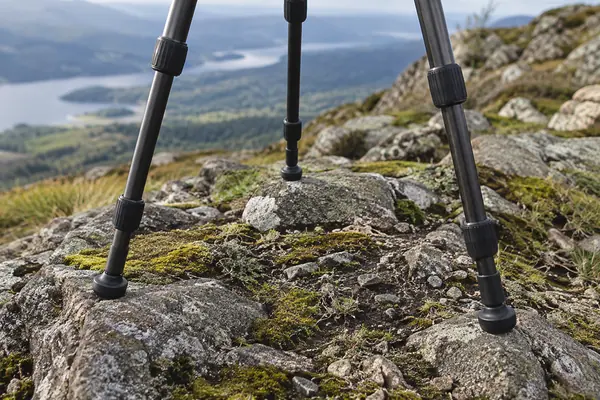
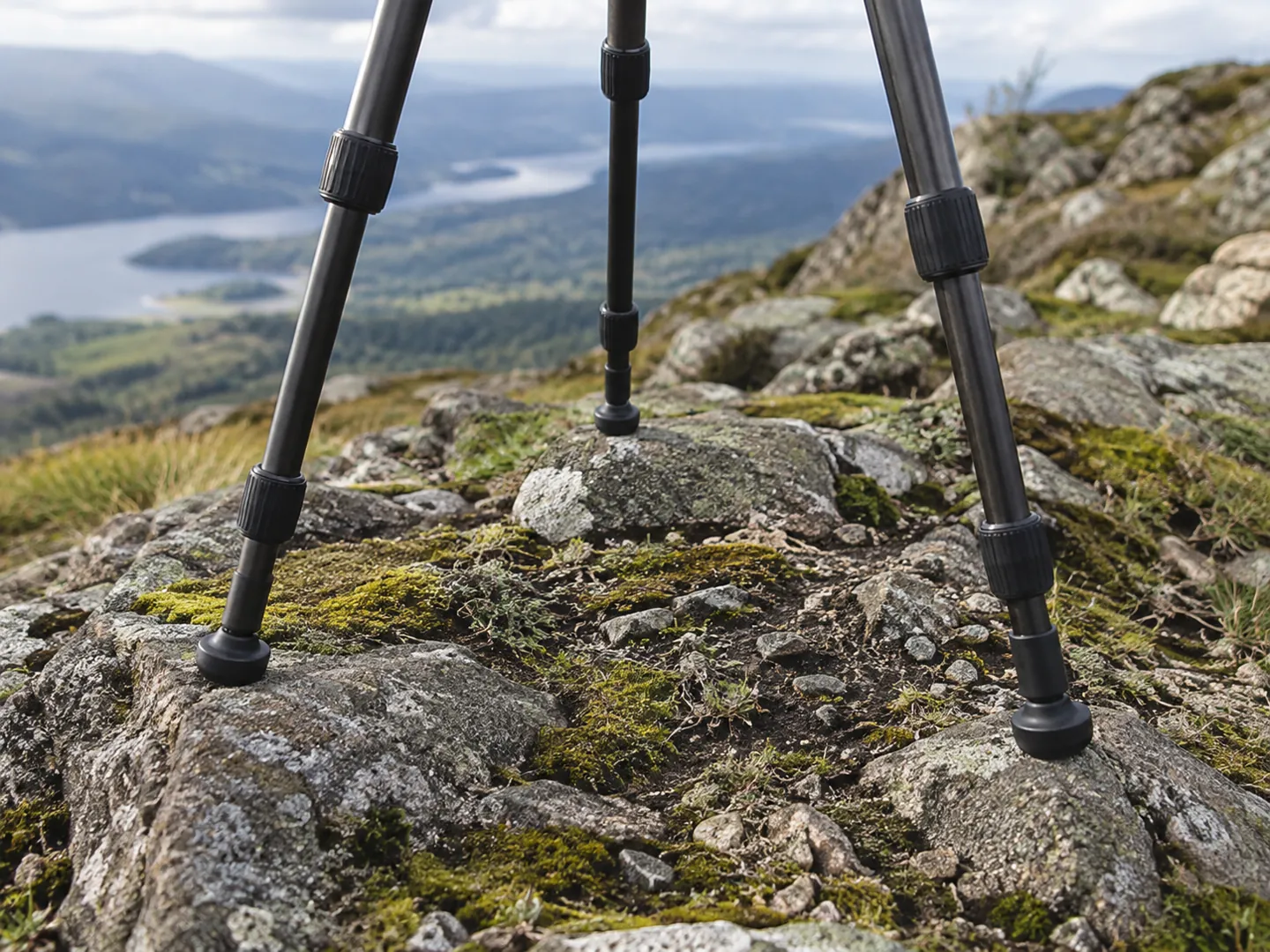
Three points that are not in a line define exactly one flat plane, so a three-legged stand cannot wobble. Four legs can rock from one set of three to another.
The maths of a stool doodletripod
KEEPING THE CAMERA STILL
A tripod is geometry you can carry.
HOLD STILL for as long as it takes
2–8× longer Longer hand-held shutter speeds
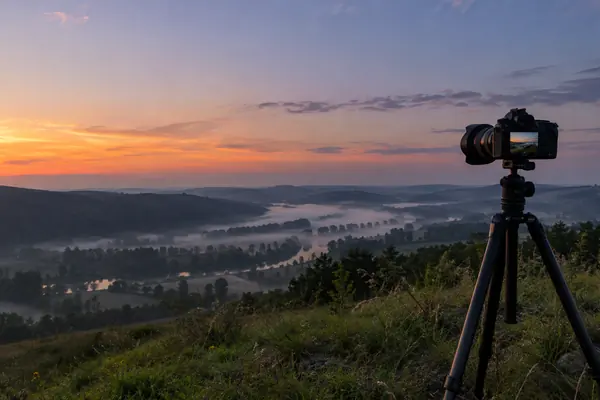
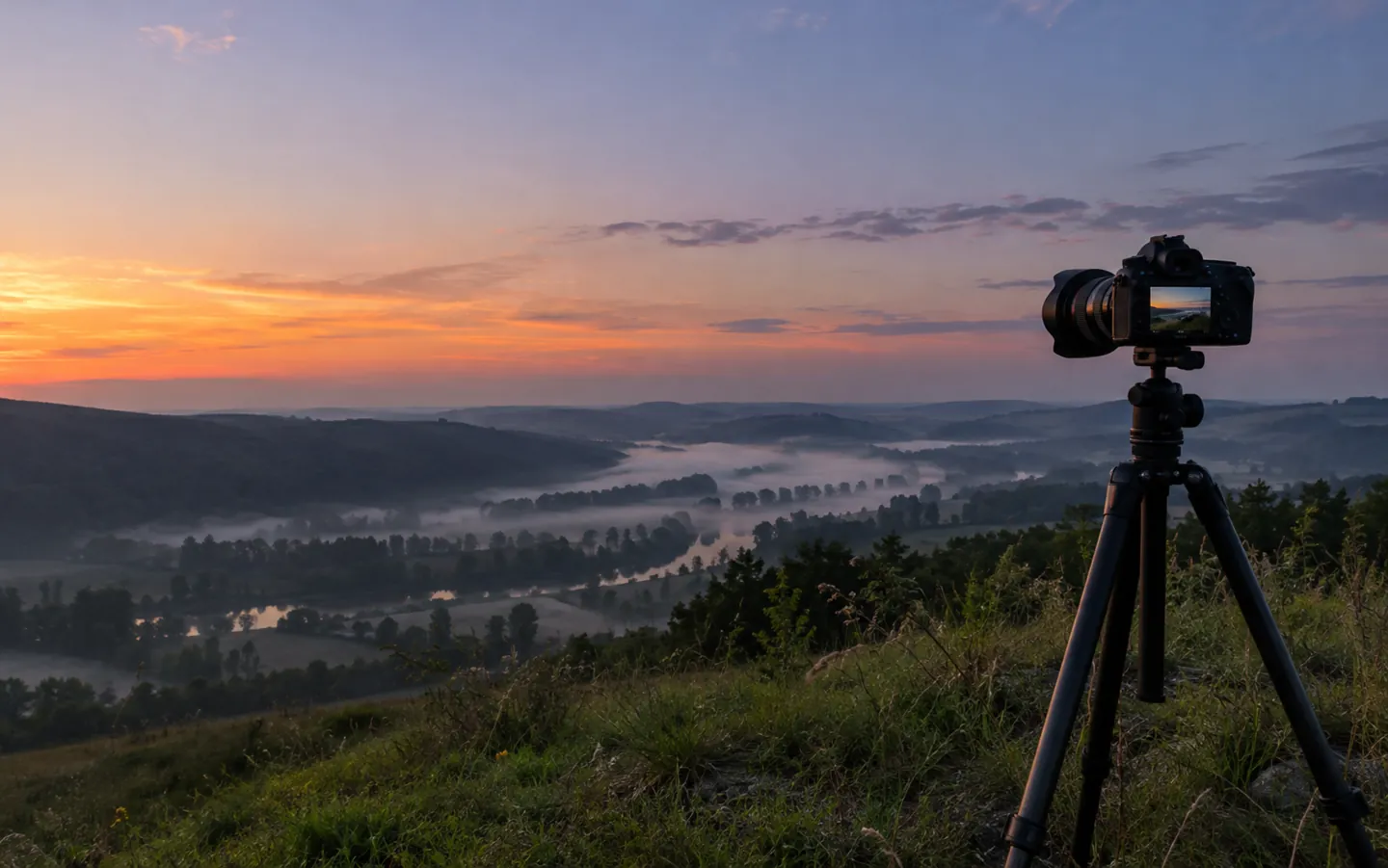
Three feet always sit firmly on the ground, uneven or not. That steadiness lets the shutter stay open long enough for dim scenes and the slow wheel of the stars.
THE SHORT ANSWER
Hands shake a little all the time.
Below a certain shutter speed, that shows in the photo.
GEOMETRY
Three points that are not in a line define exactly one flat plane, so a three-legged stand cannot wobble. Four legs can rock from one set of three to another.
The maths of a stoolCAMERA SHAKE
A common rule of thumb: hand-held, keep the exposure no longer than one over the focal length. With a 100 mm lens on a 35 mm camera, that is 1/100 second.
Check a shotNIGHT
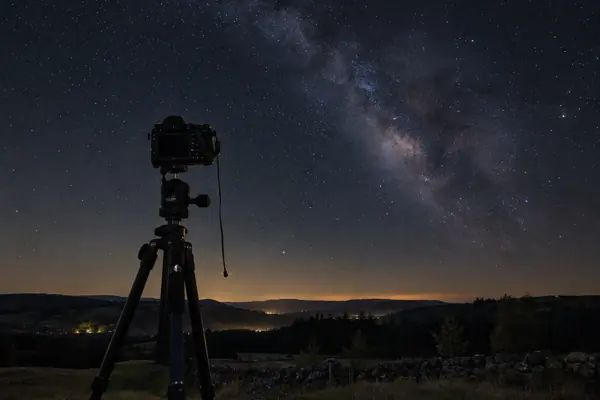
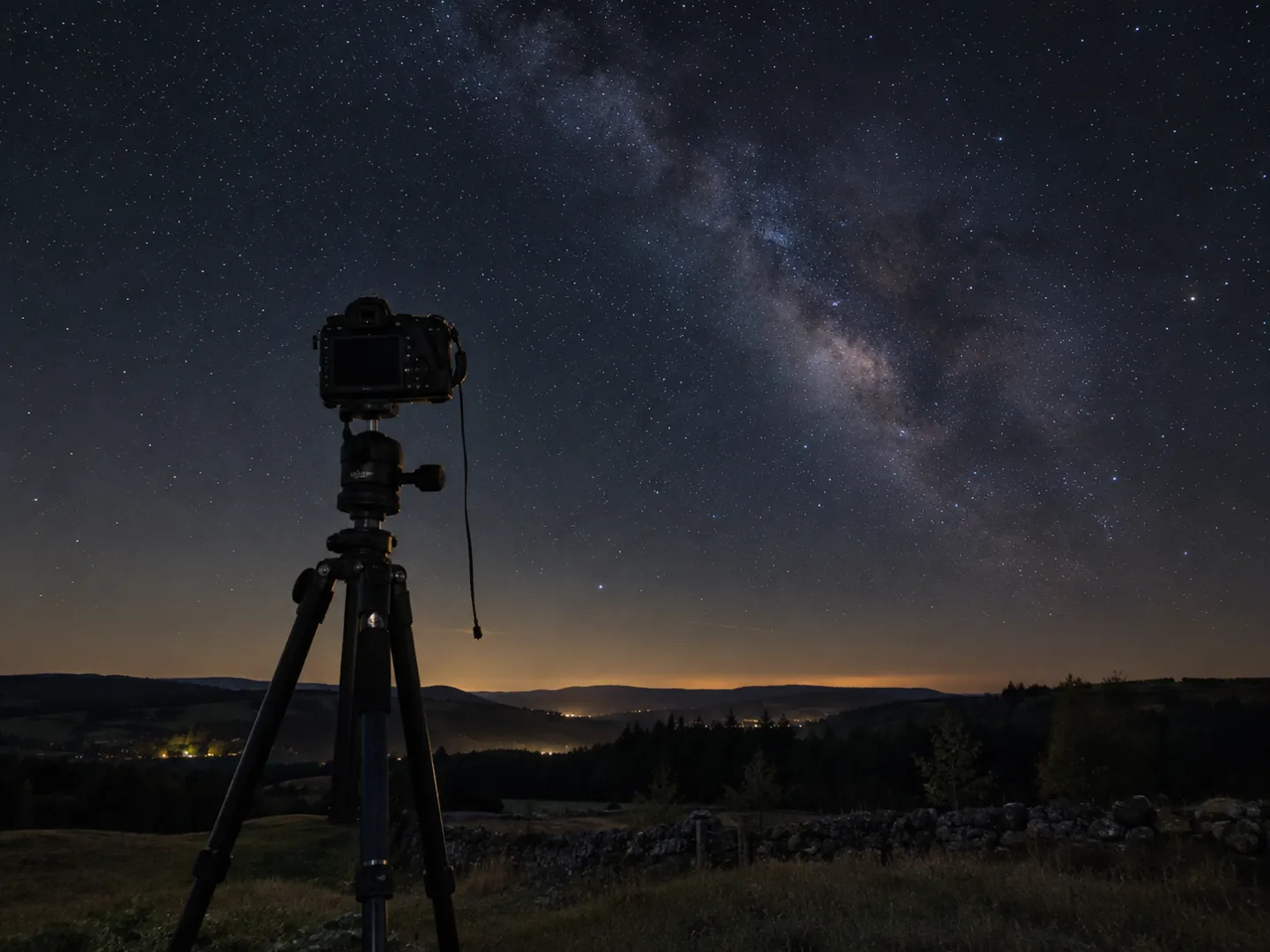
For star trails, Royal Museums Greenwich suggests a sturdy tripod, a remote or cable release and 100 or more 30-second exposures, stacked afterwards.
Set up for nightA QUICK SHAKE CHECK
Imagine a 50 mm lens on a 35 mm camera. Pick a shutter speed to see whether the rule of thumb says hands are enough. The bar shows how much you need support.
Based on the one-over-focal-length rule of thumb from Cambridge in Colour and night guidance from Royal Museums Greenwich. Rules of thumb vary with the camera and the person holding it.
FOUR TRIPOD HABITS
A tripod only helps if it is set up to be still. These tips come from Cambridge in Colour's tripod tutorial and Royal Museums Greenwich's night guide.
Extend only the thickest leg sections you need to reach the height you want. Legs usually have two to four sections, and more sections generally means less stability.
Raise the centre column only after every leg section is fully out. The column wobbles more easily than the base.
Hang a camera bag from the centre column, so long as it does not swing, and shield the base from the wind where you can.
Fire long exposures with a remote or cable release, or the self-timer, so pressing the button does not shake the camera.
TWO NUMBERS WORTH KNOWING
One figure on what in-lens stabilisation buys you,
one on what a night sky asks for.
2–8× longer
Longer hand-held shutter speeds
Image stabilisation or vibration reduction may allow anywhere from two to eight times longer shutter speeds hand-held. It does not freeze a moving subject.
STABILISATION · CAMBRIDGE IN COLOUR
100+ shots
30-second exposures for one picture
Rather than one exposure of at least 30 minutes, which adds noise, the guide prefers 100 or more 30-second shots taken in a row and stacked in software.
STAR TRAILS · ROYAL MUSEUMS GREENWICH
Resting a camera on a hard surface, with a remote release or the self-timer, can often give even sharper photos than a tripod, says Cambridge in Colour, though it limits where you can point the camera.
THE MATHS OF A STOOL
The University of Houston's Engines of Our Ingenuity puts it simply: it is impossible for a three-legged table to wobble. Three points are exactly the right number to define a flat surface, as long as they are not in a line.
Tables with four legs can, and often do. On an uneven floor, a four-legged table rests first on one set of three legs, then tips to another. That is why a tripod settles on rocks, sand or a sloping path.
Questions
Three points not in a line always define one flat plane, so three feet always touch the ground firmly. A four-legged stand on uneven ground can rock between different sets of three legs.
A common rule of thumb for a 35 mm camera is to keep the exposure no longer than one over the focal length: with a 100 mm lens, 1/100 second or faster.
Not entirely. Cambridge in Colour says stabilisation may allow two to eight times longer shutter speeds hand-held, but it does not help much with moving subjects, and night exposures of many seconds still need support.
Only after all the leg sections are fully extended. The centre column wobbles more easily than the legs and base.
Royal Museums Greenwich suggests a camera with manual controls, a lens of 28 mm or wider, a sturdy tripod and a remote or cable release, with 100 or more 30-second exposures stacked afterwards.
Updated
ABOUT THIS NAME
doodletripod.com is part of the DoodleSale portfolio. It isn't in an auction right now, but you can ask about leasing it.